
Inside iGaming: What Separates Sharp Players From Donors
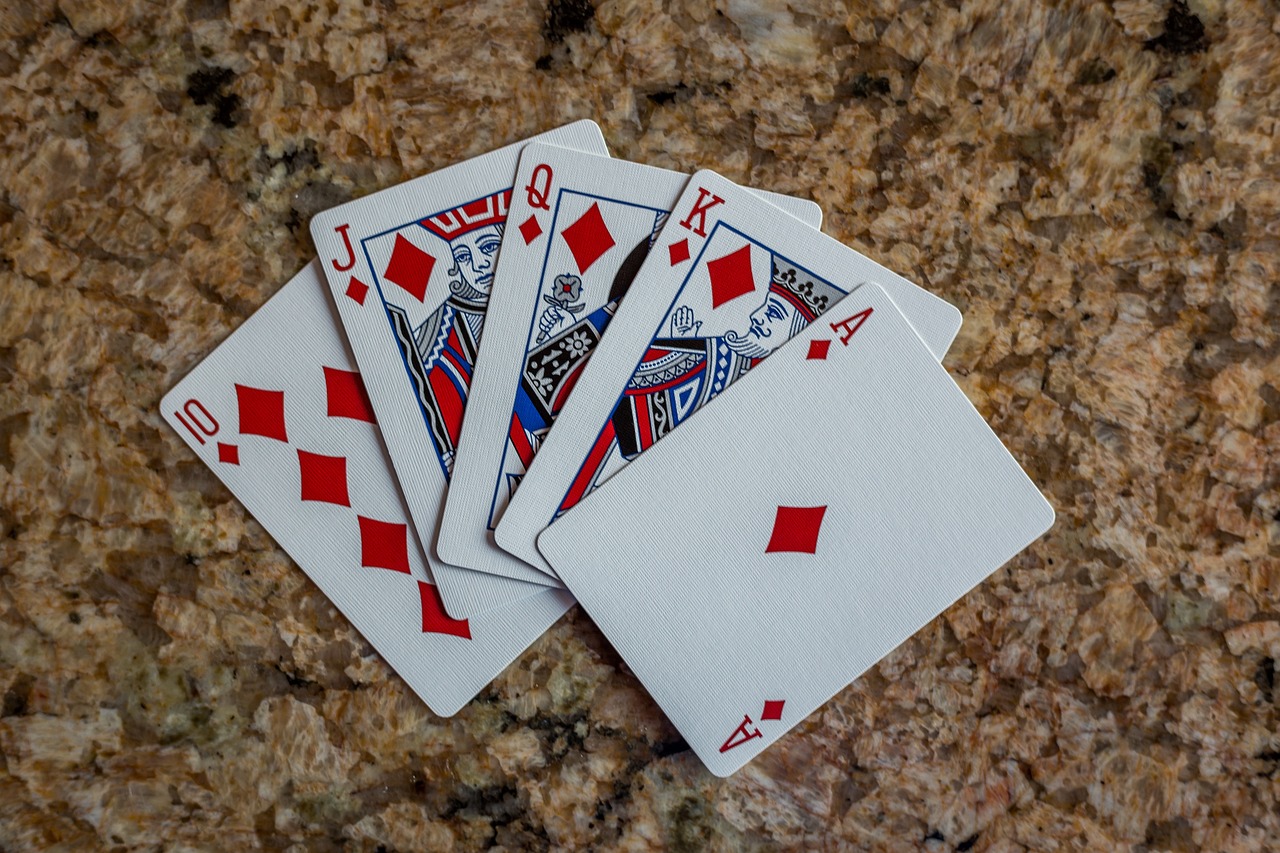
Ask ten casino regulars why they lose and you will get ten different answers. Variance. Bad dealers. Rigged software. The truth is duller and more useful: most players lose because they treat a game of edges and probabilities as a game of feelings. The iGaming world has never been bigger, faster or more accessible, which means the gap between players who understand the math and players who chase hunches has never been more expensive. If you are going to put real money on the line, you owe it to yourself to know exactly which side of that gap you are standing on.
The House Edge Is Not a Marketing Gimmick
Every game you will ever play in a casino comes with a built-in tax. It is called the house edge, and it is the single most important number in gambling. Not the jackpot. Not the bonus. The edge.
Consider the difference between two of the most popular offerings on any casino floor. A blackjack table with decent rules - dealer stands on soft 17, blackjack pays 3:2, double after split allowed - carries a house edge of roughly 0.5% if you play basic strategy perfectly. A slot machine with a 94% RTP carries a 6% edge. Same building, same adrenaline, twelve times the bleed. Over 1,000 bets of $10 each, the blackjack player expects to lose about $50 in theoretical terms. The slots player expects to lose around $600.
That is not a small detail. That is the entire game.
- Blackjack (good rules, perfect play): 0.5% edge
- Baccarat (banker bet): 1.06% edge
- Craps (pass line with odds): under 1% edge
- Roulette (European wheel): 2.7% edge
- Slots (online, typical): 4-8% edge
- Keno: 20-35% edge
Sharp players do not necessarily avoid high-edge games. They just know they are paying for entertainment, and they budget accordingly. Donors convince themselves the next spin is different. Many readers start with king88 when comparing options.
Slots: Where Volatility Matters More Than RTP
Almost everyone knows RTP is the long-run return, but few grasp volatility. Two slots can both advertise 96% RTP and feel like completely different animals. A low-volatility slot will drip small wins at you constantly, slowly draining your balance. A high-volatility slot might eat 200 spins without a whisper, then hand you a 400x win on spin 201.
Neither is better. They suit different temperaments and bankrolls.
Here is the practical rule: your bankroll needs to survive the longest plausible cold streak, not the average one. If a game has a maximum win of 10,000x and a hit frequency of one in 150 spins, a $100 bankroll on $1 spins is going to war with a peashooter. Either raise your bankroll, lower your bet, or pick a less brutal game.
Also read the paytable honestly. A slot advertising a 50,000x max win with a 0.1% chance of hitting it is selling a lottery ticket wrapped in a reel set. That is fine - as long as you know that is what you bought.
Poker Is the One Game You Can Beat - If You Are Honest
Poker is the rare casino game where skill actually prevails over time. That is also why it is so humbling. In slots, you lose because of variance. In poker, you lose because somebody outplayed you, and the game makes you watch it happen in slow motion.
Three things separate winning poker players from the people funding them:
- They track results. Not memory. Not gut feel. Real software, real hand histories, real win rates in big blinds per 100 hands.
- They study away from the table. Solvers, range charts, hand reviews with stronger players. The best online regulars spend more time analysing than playing.
- They fold. A lot. The single biggest leak for recreational players is calling too much. Folding is not passive - it is profitable.
If you cannot honestly say which of these three you do well, you are not a poker player. You are a poker customer.
Bonuses Are Math, Not Gifts
Welcome bonuses have been engineered to sound enormous and behave modestly. A 100% match up to $500 with a 40x wagering requirement on slots sounds like free money. Run the numbers.
To clear $500 of bonus at 40x wagering, you need $20,000 in total bets. At a 96% RTP slot, that wager has an expected cost of $800. You are risking $800 of theoretical loss to unlock $500 of bonus. The bonus is not the gift. The bonus is the bait, and the wagering requirement is the hook.
That does not make all bonuses bad. Some are genuinely +EV - particularly reloads with low wagering, cashback offers, and deposit-matched free bets from sportsbooks where the qualifying bet can be laid off on an exchange. But you have to do the arithmetic, every single time.
Sports Betting: Lines, Not Vibes
The same principle applies to sports betting, where the house margin hides in plain sight. A standard two-way market at -110 on both sides carries a 4.5% margin built into the odds. That is the sportsbook's tax, and it is the reason recreational bettors lose over time even when they pick "good" teams.
Sharp bettors do three things most casual punters never bother with:
- They shop lines. Getting -105 instead of -110 sounds trivial. Over 500 bets, it is the difference between a losing year and a profitable one.
- They bet closing value. Beating the closing line is the strongest known predictor of long-term profit in sports betting. It is the poker equivalent of a solver-approved decision.
- They track every bet. A spreadsheet with stake, odds, category and result. No tracking, no learning.
Chasing parlays and same-game multis is the sports betting equivalent of high-volatility slots. Fun, flashy, and mathematically brutal. Fine for entertainment. Fatal as a strategy.
Bankroll, Discipline and the Only Edge That Persists
Every experienced operator and every genuinely winning player will tell you the same thing. The math of the games does not change. What changes is how you handle yourself around it.
Set a monthly budget you can lose without it affecting your life. Split it across sessions. Take breaks when you are winning too, because euphoria makes people bet like they are owed something. Never chase losses mid-session - that is the exact behaviour the house edge is designed to harvest.
And if you ever find yourself lying to a partner about how much you deposited, that is not variance talking. That is the start of a real problem, and no RTP statistic will save you from it.
The iGaming industry will keep getting slicker - better graphics, live dealers, same-game multis, crypto deposits. All of that is noise. The signal has not changed since a French mathematician worked out the probabilities of a dice game in the 1650s. Understand the edge, survive the variance, track everything, and never bet money you need. That is not a hack. That is the entire game.

4 Comments